
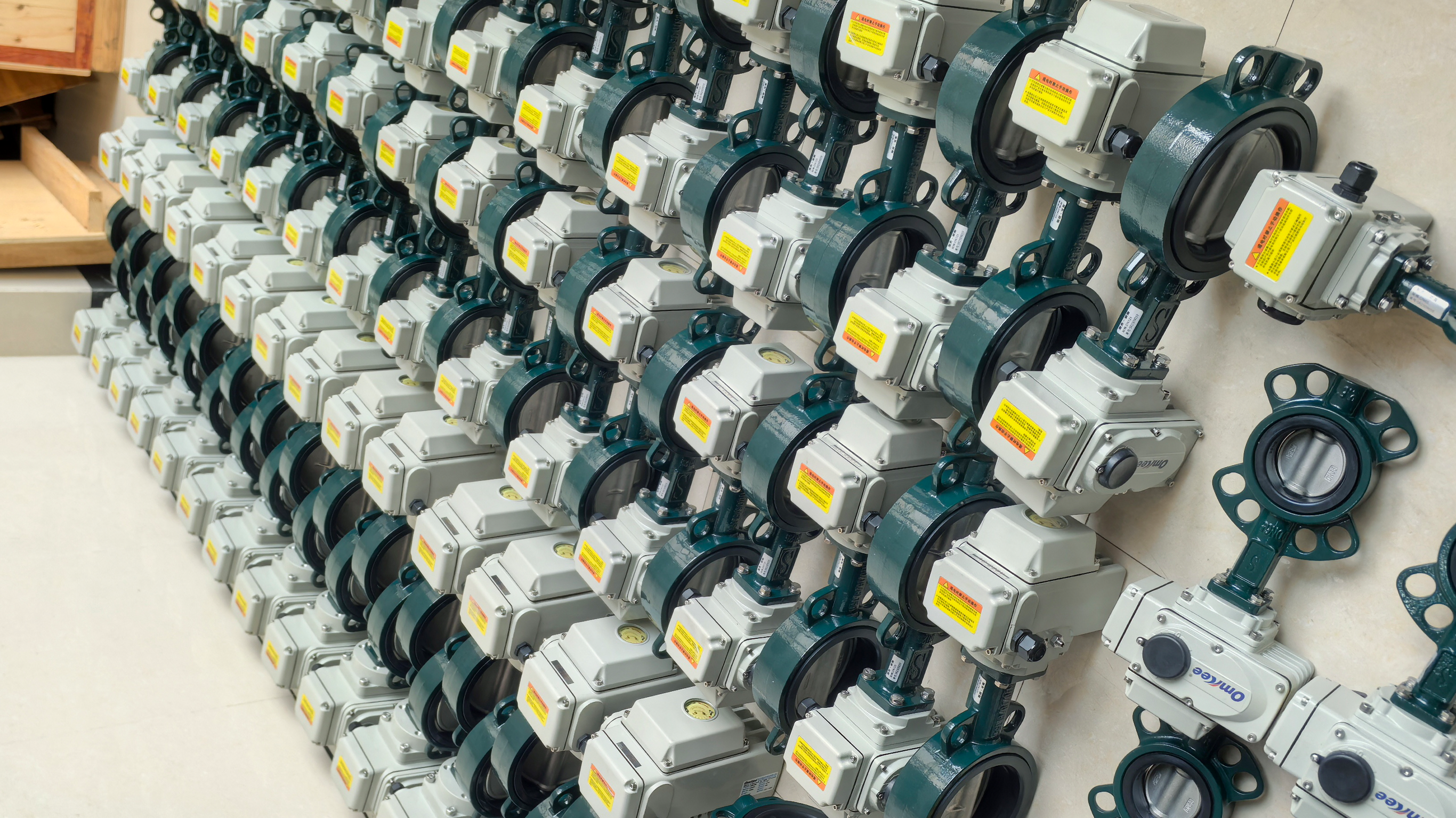
In modern B2B industrial engineering, electric actuators serve as the critical muscle behind automated valve, damper, and fluid infrastructure control. However, procurement teams and operations managers frequently run into operational bottlenecks because of an unoptimized match between the actuator and the field environment.
Choosing the wrong hardware inevitably spirals into excessive maintenance downtime, early component failure, and compromised plant safety. To secure a high return on investment and seamless grid tracking, engineers must evaluate five fundamental selection criteria before finalizing any industrial procurement brief.
1. Ambient Operating Environment & Ingress Protection (IP)
Industrial processing lines subject hardware to highly volatile outdoor or chemical atmospheres. Deploying a standard, light-duty housing in a heavy infrastructure zone invites catastrophic moisture or corrosive dust ingress.
-
Waterproof & Submersion Ratings: For washdown blocks, high humidity, or flooding hazards, the actuator enclosure must achieve a verified IP68 waterproof and dust-tight certification.
-
Chemical & Temperature Shielding: Aggressive processing demands deep-engineered casting materials—such as ADC12 die-cast aluminum alloy—pre-treated with shot-blasting and surface oxidation. Outer coatings should rely on high-grade thermo-sprayed powder coating (such as AkzoNobel profiles) thicker than 0.2 mm to withstand constant temperatures above 150°C without blistering or cracking.
-
Hazardous Area Compliance: If volatile gases, dust clouds, or flammable vapors are native to the plant, procurement must mandate flameproof classifications, such as Ex db IIB T4 Gb certified under modern explosion-proof guidelines (e.g., GB 3836 / ATEX frameworks).
2. Rated Torque Output & Mechanical Load Capacity
Selecting an electric actuator without mapping the specific torque profile of the driven valve or industrial damper is like driving an underpowered transport truck up a steep grade. The system will stall, overheat, and fail prematurely.
-
Torque Reserve Safety Margin: Operational loads are rarely linear. Medium viscosity changes, crystallization, and high-pressure differentials across a pipeline segment dramatically elevate the breakthrough torque required to open a valve.
-
The 1.5x Engineering Principle: Professional industrial systems require motors designed with a 1.3x to 1.5x torque safety reserve relative to the valve’s maximum rated breakaway load. This protects the internal gear trains from snapping or shearing if pipeline scaling increases the valve’s physical resistance over time.
3. Automation Control and Feedback Circuitry
Modern control centers rely on uninterrupted data feeds from terminal field assets. Actuators must be categorized by their internal circuitry to match the automation system layout:
| Control Circuit Style | Command Interface | Typical Feedback Mechanism | Best Suited For |
| On-Off Type (Switching Volume) | AC/DC reversing relays or phase-reversal circuits | Passive dry contacts or active power signals | Simple open/close utility sequencing |
| Potentiometer Tracking | External limit logic | Continuous resistance signals (0–1k$\Omega$ or 500$\Omega$) | Real-time position telemetry tracking |
| Position Transmitter Type | External switching loops | Continuous current-loop signals (4-20mA DC / 0-10mA) | High-noise, long-distance signal networks |
| Intelligent Modulating (Regulating) | 4-20mA DC / 1-5V DC analog signals | 4-20mA DC / 1-5V DC proportional loops | Continuous loop flow-rate modulation |
For high-end modulating systems, selecting actuators featuring opto-isolated input/O boards and solid-state Thyristor (SCR) drive modules eliminates the time lag and structural degradation of older mechanical relays, supporting stable automation loops.
4. Operational Speed & Duty Cycle Frequency
In automated production assembly blocks, rapid chemical reaction loops, or emergency pipeline isolation systems, system responsiveness can make or break plant efficiency.
-
90° Part-Turn Run Time: Actuators must hit targeted travel speeds (e.g., 50 Nm @ 20S or a heavy-duty 2500 Nm @ 75S) without generating excessive thermal friction.
-
Starts Per Hour Limits: Modulating loops require high-frequency start-stop tolerances. Standard actuators will trigger thermal overload protection if cycled too rapidly. High-precision intelligent modulating actuators use advanced electronic braking to eliminate motor rotational inertia, allowing up to 1,200 start cycles per hour with tight positioning accuracy ($\ge$ 0.5%) and zero overshoot hunting.
5. Total Cost of Ownership (TCO) vs. Initial Price
Industrial B2B procurement strategies should never prioritize cheap upfront acquisition over long-term physical endurance. A lower initial price point almost always translates to higher total cost of ownership via constant field interventions, seal swaps, and line shutdowns.
-
Premium Component Integration: Choosing actuators that feature high-wear aluminum bronze alloy forged worm wheels, induction-tempered 40Cr alloy steel shafts, P6-class deep-groove bearings matching EMQ (ZV2) acoustics, and German twin-lipped skeleton TC oil seals significantly extends service life.
-
Pre-tested Factory Reliability: Ensure your supplier executes 100% Factory Acceptance Testing (FAT), including mandatory torque testing, 1500V dielectric insulation checks, and positive-pressure underwater immersion tests. Buying certified quality yields massive savings in maintenance budgets over the equipment's multi-decade lifecycle.
Conclusion: Partnering with High-End Solutions
Maximizing plant runtime requires an exact alignment between your operating parameters and actuator materials. Investing in high-grade, standard-compliant electric actuators—engineered via advanced CAD platforms like UG software and built on high-tolerance 4-axis CNC centers—delivers reliable operational safety and premium fluid regulation for international B2B enterprises.
Need an Engineered Actuator Configuration for Your Pipeline? Don't leave your plant uptime to guesswork. Contact our application engineering team today to receive a complete, tailored tech-brief and torque evaluation for your specific project.


