OMK-05A Torque and Travel Time Options Compared
News Details
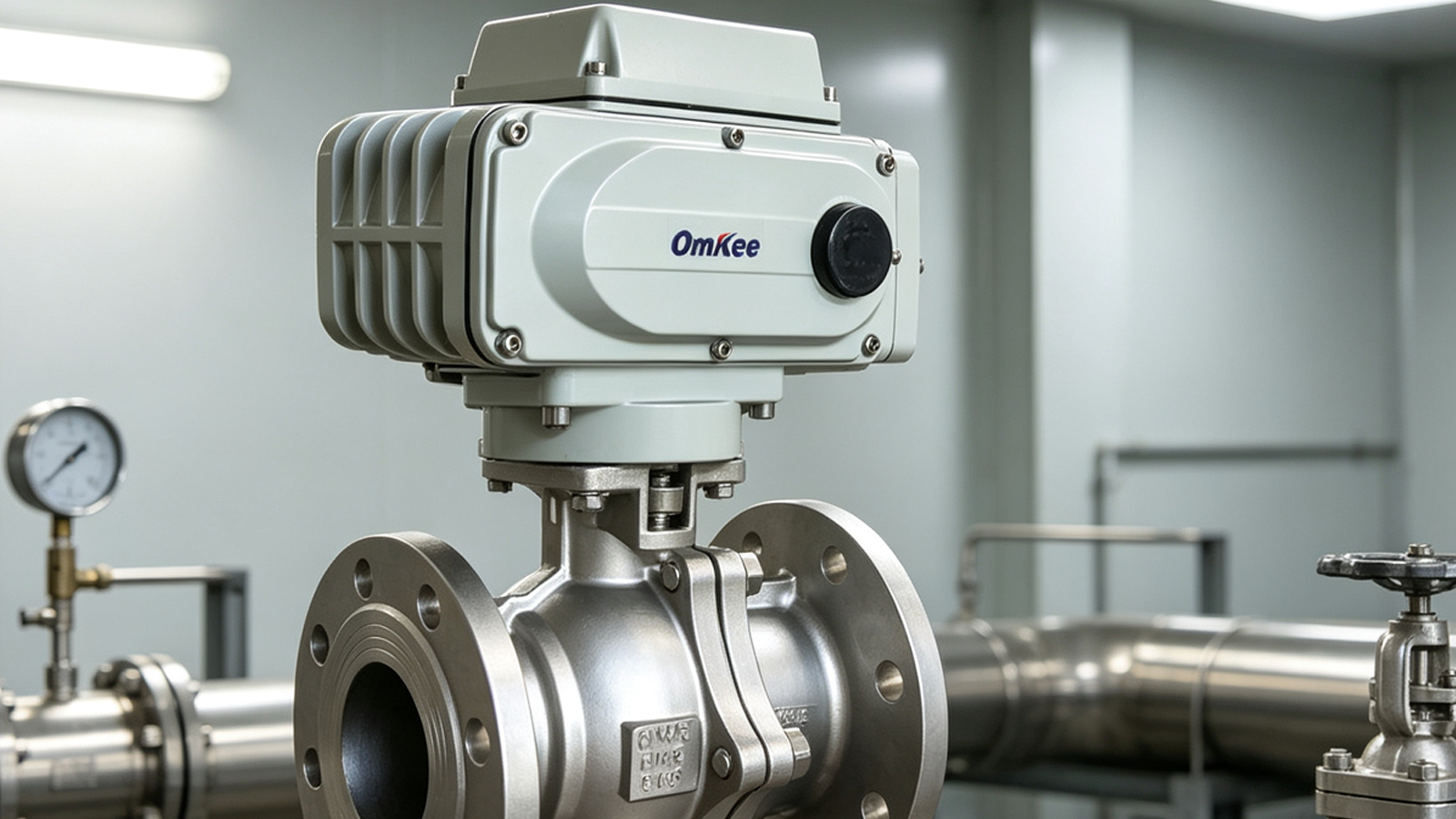
Choosing an electric actuator is not only about torque. Travel time is also important, especially when the actuator operates a quarter-turn valve.
The OMK-05A is a compact electric actuator designed for quarter-turn valve control. Its standard configuration provides 50 Nm of torque with a 20-second 90° travel time. Other torque and speed combinations are also available for different valve requirements.

Understanding these options helps valve manufacturers, system integrators, and industrial users select a suitable actuator without choosing too much or too little capacity.
What Does 90 Degree Actuator Travel Time Mean?
For a quarter-turn valve, 90° travel means rotating the valve from one end position to the other.
For example, a butterfly valve or ball valve may move from fully closed to fully open through a 90° rotation. The 90 degree actuator travel time is the time needed to complete this movement.
If an actuator has a 20-second travel time, it takes about 20 seconds to move through the specified 90° range under its rated conditions.
Travel time affects how quickly a valve responds. However, faster is not always better. The correct speed depends on the process, valve type, fluid, and control system.
OMK-05A Torque and Travel Time Options
The OMK-05A series supports several torque and travel-time combinations.
| Configuration | Torque | 90° Travel Time |
|---|---|---|
| Standard | 50 Nm | 20 seconds |
| High-speed option | 20 Nm | 4 seconds |
| High-speed option | 30 Nm | 10 seconds |
| Slow-speed option | 50 Nm | 60 seconds |
OMKEE lists these combinations as available options for the OMK-05 series. The actuator also supports different power supplies, including DC24V, AC24V, AC110V, AC220V, and AC380V, depending on the configuration.
This means users should select the configuration based on both required valve torque and required operating speed.
50 Nm Electric Actuator: When Is It Suitable?
A 50 Nm electric actuator can be a practical choice for many small and medium quarter-turn valves.
The key point, however, is that valve size alone should not determine actuator torque.
The valve manufacturer should provide the torque required to operate the valve. This value should cover the actual working conditions, including starting, running, and seating torque.
For example, if a valve requires 35 Nm at its highest operating point, a 50 Nm actuator may provide a suitable margin. If the valve requires more than 50 Nm, a larger actuator should be considered.
Therefore, always compare the valve's required torque with the actuator's rated output before making a selection.
Comparing the 20-Second and 60-Second Options
The standard OMK-05A configuration provides 50 Nm with a 20-second 90° travel time. A slower 60-second option is also available at the same 50 Nm torque.
20 Seconds: General-Purpose Operation
The 20-second option is suitable when the valve needs a normal opening and closing speed.
It can work well for applications such as:
-
Water treatment
-
HVAC systems
-
Industrial process lines
-
General fluid isolation
-
Automated butterfly valves
A moderate travel speed can also help reduce sudden changes in flow.
60 Seconds: Slower Valve Movement
The 60-second option moves the valve more slowly.
This can be useful when a process requires gradual valve movement. A slower stroke may help reduce sudden flow changes and make the valve response easier to manage.
However, the final choice should be based on the process requirements rather than speed alone.
What About the 4-Second and 10-Second Options?
The OMK-05 series also lists faster configurations:
-
20 Nm / 4 seconds
-
30 Nm / 10 seconds
These options provide faster 90° movement but with lower rated torque.
This creates an important selection rule: higher speed and higher torque are not always available in the same configuration.
For example, if a valve only needs 20 Nm, a 4-second configuration may be useful when fast operation is important. If the valve needs 50 Nm, the 20-second or 60-second 50 Nm configuration may be more suitable.
How to Choose the Right OMK-05A Option
The selection process can be kept simple.
Step 1: Check Valve Torque
First, find the valve's maximum required operating torque.
Do not estimate this value only from valve diameter. Valve design, pressure, seat material, and fluid conditions can all affect torque.
Step 2: Check the Required Travel Time
Next, determine how quickly the valve must open or close.
Ask:
-
Does the valve need fast isolation?
-
Is gradual movement preferred?
-
How often does the valve operate?
-
Could fast movement cause unwanted pressure changes?
-
Does the control system require a specific response time?
Step 3: Match Torque and Speed
Now compare the requirements with the available OMK-05A configurations.
For example:
Valve requirement: 18 Nm
Required travel: less than 5 seconds
A 20 Nm / 4-second configuration may be worth considering.
Another example:
Valve requirement: 45 Nm
Required travel: around 20 seconds
The standard 50 Nm / 20-second configuration may be a better match.
Step 4: Check the Complete Application
Torque and travel time are not the only factors.
Also check:
-
Power supply
-
Control method
-
Valve mounting
-
Operating frequency
-
Ambient temperature
-
Protection requirements
-
Feedback signals
-
Installation space
The OMK-05A supports 360° installation and is designed for industrial valve automation. Its listed operating temperature range is generally -20°C to +60°C, with special low-temperature versions available by customization.
Why Torque and Speed Should Be Selected Together
It is easy to focus on one specification and ignore the other.
For example, selecting the fastest actuator available may seem attractive. However, if the actuator does not provide enough torque, it may not operate the valve reliably.
On the other hand, choosing a much larger actuator only for extra torque can increase cost and may not provide the required travel speed.
A better approach is to match the actuator to the actual valve requirement.
Torque determines whether the actuator can move the valve. Travel time determines how quickly it can do so.
Both values should be considered before selection.
OMK-05A at a Glance
The OMK-05A provides several useful combinations for quarter-turn valve automation:
-
50 Nm / 20 seconds: standard balance of torque and speed
-
50 Nm / 60 seconds: slower movement for applications that need gradual operation
-
30 Nm / 10 seconds: faster operation with moderate torque
-
20 Nm / 4 seconds: fast operation for lower-torque valves
The right option depends on the valve's torque requirement and the process response time.
For valve manufacturers and system integrators, this makes the OMK-05A a flexible option for different quarter-turn applications. OMKEE develops electric actuators and automated valve control systems for industrial applications, with products designed for sectors including petroleum, power, and water treatment.
Final Selection Checklist
Before selecting an OMK-05A configuration, confirm:
-
Required valve torque
-
Required safety margin
-
Required 90° travel time
-
Valve type and size
-
Power supply
-
Control signal
-
Feedback requirements
-
Operating frequency
-
Ambient conditions
-
Mounting requirements
The best actuator is not simply the one with the highest torque or fastest speed. It is the one that matches the valve and process requirements.
For more information about OMKEE electric actuators and valve automation solutions, visit the OMKEE official website.


